 RainsFlo
 If your plant still relies on braided packing, you already know the routine: adjust the gland, watch the leak rate, adjust again, and hope the shaft does not start showing wear. Rainsflo packing is designed to change that cycle by changing how the packing set behaves inside the stuffing box, especially how load, lubrication, and heat are managed over time.
This is not a “newer is always better” conversation. It is a practical look at why traditional braided sets can be harder to stabilize, and what Rainsflo is built to do differently when you want longer runs, fewer interventions, and more consistent leakage control.
The Common Challenge With Braided Packing: Uneven Ring Activation
With braided packing, gland tightening often concentrates compression near the top of the stuffing box. Rings can stick, load does not always transfer evenly, and the bottom rings may not be doing much sealing work. That can lead to inconsistent performance, more frequent tweaks, and contamination working deeper into the set.
One of the key concepts behind Rainsflo packing is that the packing gland adjustment is intended to activate all the rings in the stuffing box, not just the top few. Sealing is described as beginning at the base ring and continuing through the entire mass. In day-to-day terms, that means the system is designed to seal more uniformly and keep leakage to a minimum in a way many crews struggle to achieve with braided sets.
Leakage Control That Is Easier to Maintain
Braided packing typically involves tradeoffs. If you chase “no leak,” you risk heat and wear. If you back off to protect the shaft, you may accept more leakage than you want. A system that seals more uniformly can make that balance easier.
Instead of relying on heavy compression at the gland, Rainsflo packing emphasizes stable sealing through the full set. Lower leakage can also reduce the amount of contamination pulled into the stuffing box, which matters because embedded grit and solids can accelerate wear and shorten packing life.
What GFM Changes: Lubrication and Heat Behavior
Braided packing can run hot when it dries out or is overtightened. Heat is not just a temperature issue, it is a wear issue. Higher friction increases sleeve and shaft damage risk and can turn normal adjustment into frequent intervention.
Rainsflo packing uses a material described as GFM (Granulated, Flowable, Material) and is positioned as self-lubricating and heat conductive. The practical takeaway is that it is designed to stay resilient and adjustable for leakage control, and to help avoid hot spots that shorten service life. The system is also described as having stored lubrication that releases over time, and as responding to overtightening by increasing lubrication rather than translating extra compression into shaft damage.
Quick Comparison for Maintenance Teams
- Braided packing often concentrates load near the gland, which can create uneven sealing
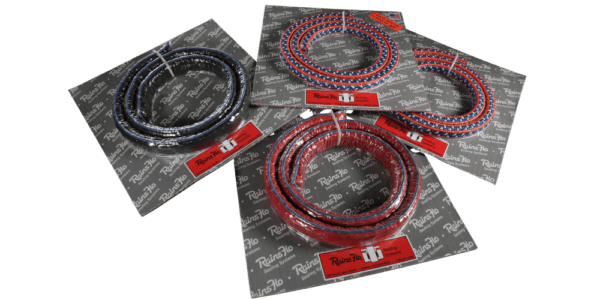
- Rainsflo packing is designed to activate the full ring set through the stuffing box
- Braided sets can run hotter when over-compressed and dry out faster
- Rainsflo packing emphasizes stored lubrication release and heat conductivity
- Braided packing maintenance often means full replacement when adjustment is gone
- Rainsflo packing supports a replenishment-style approach with Add-A-Ring
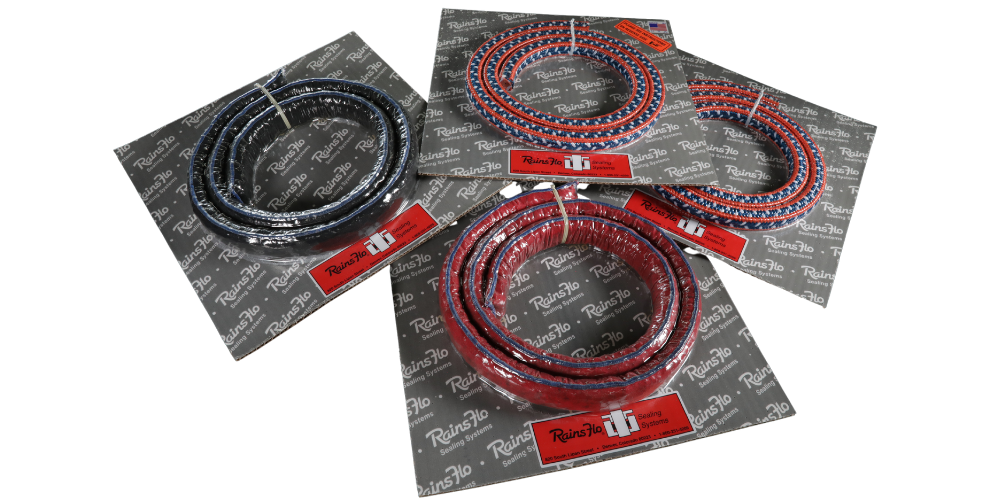
Maintenance and Downtime: Replace Everything vs Replenish
A common pain point with braided packing is the “all or nothing” repack. Once gland travel is gone or performance drops off, a full pull and replacement is usually next. That is time, labor, and downtime.
It includes an Add-A-Ring maintenance concept, where packing is replenished instead of being readily replaced. That does not eliminate maintenance, but it can change the rhythm of it. For many plants, the value is fewer emergency repacks and more predictable planning, especially on equipment that cannot be down for long.
A More Practical Way to Choose Between Them
If braided packing is working and your shaft wear is under control, you may not need to change anything. But if you are managing chronic leakage, frequent adjustment, or repeated sleeve work, those patterns are worth investigating.
Rainsflo packing is essentially a different sealing strategy: more uniform ring activation, lubrication behavior designed to protect the shaft, and a maintenance method intended to reduce full replacement cycles. If those match the problems your crew is actually fighting, it is a straightforward reliability upgrade to evaluate.