 RainsFlo
 In industrial settings where agitation and mixing are core to production—whether in food processing, chemicals, pulp, or wastewater treatment—equipment reliability depends heavily on the performance of seals. Agitators and mixers expose seals to vibration, abrasive slurries, irregular shaft motion, and heavy loads, making sealing performance a frequent bottleneck in uptime and efficiency. While many factors influence equipment longevity, the role of effective sealing is often underestimated.
At RainsFlo, we engineer sealing solutions that help extend maintenance intervals, reduce leakage, and improve system uptime — especially in challenging agitation and mixing applications where conventional packing frequently falls short.
Why Sealing Matters in Agitation and Mixing
In applications that rely on agitation and mixing, shafts and stuffing boxes operate under far more demanding conditions than typical pump systems. Instead of smooth, continuous rotation, mixers often experience cyclic torque, axial loads, and variable speeds. This irregular movement accelerates wear in traditional braided packing, which struggles to maintain consistent contact with the shaft surface.
Industry maintenance guidance notes that vibration and shaft runout are among the leading causes of seal and packing failure in mixing equipment. When seals can’t adapt to shaft movement or abrasive media, leakage, downtime, and higher maintenance costs quickly follow. Slurry and pulp environments further compound the problem by introducing abrasion and chemical exposure, which degrade inferior sealing materials and accelerate wear on shafts, bearings, and other critical components.
Common Issues in Sealing During Agitation and Mixing
Operators responsible for agitation and mixing equipment often encounter several recurring problems:
- Vibration and Shaft Runout: The variable forces during mixing lead to uneven contact in the sealing zone, which causes creep, galling, and early packing wear.
- Abrasive Slurries and Particulates: Fibrous or gritty media — common in pulp or chemical slurries — abrade packing and seal faces quickly.
- Temperature Fluctuations: Mixing viscous or exothermic mixtures can generate heat that degrades seals not rated for those conditions.
- Complex Access: Maintenance teams often struggle to reach seals embedded deep within agitator housings, leading to delayed upkeep and cumulative damage.
These issues are familiar to anyone responsible for agitators or industrial mixers. They also highlight why standard packing materials sometimes fail: they aren’t designed to handle the combination of motion irregularity, abrasives, and thermal stress typical of agitation and mixing.
How RainsFlo Sealing Solutions Help
RainsFlo’s approach to sealing in agitation and mixing applications centers on adaptability, resilience, and ease of maintenance. Our sealing systems, built from proprietary GFM® (Granulated Flowable Material), are engineered to conform to irregular shaft surfaces and maintain compression even under vibration or shaft runout.
Here’s how RainsFlo solutions address the common challenges:
Adaptable Conforming Material
Unlike rigid braided packing, GFM® flows into micro‑gaps and uneven surfaces, maintaining consistent compression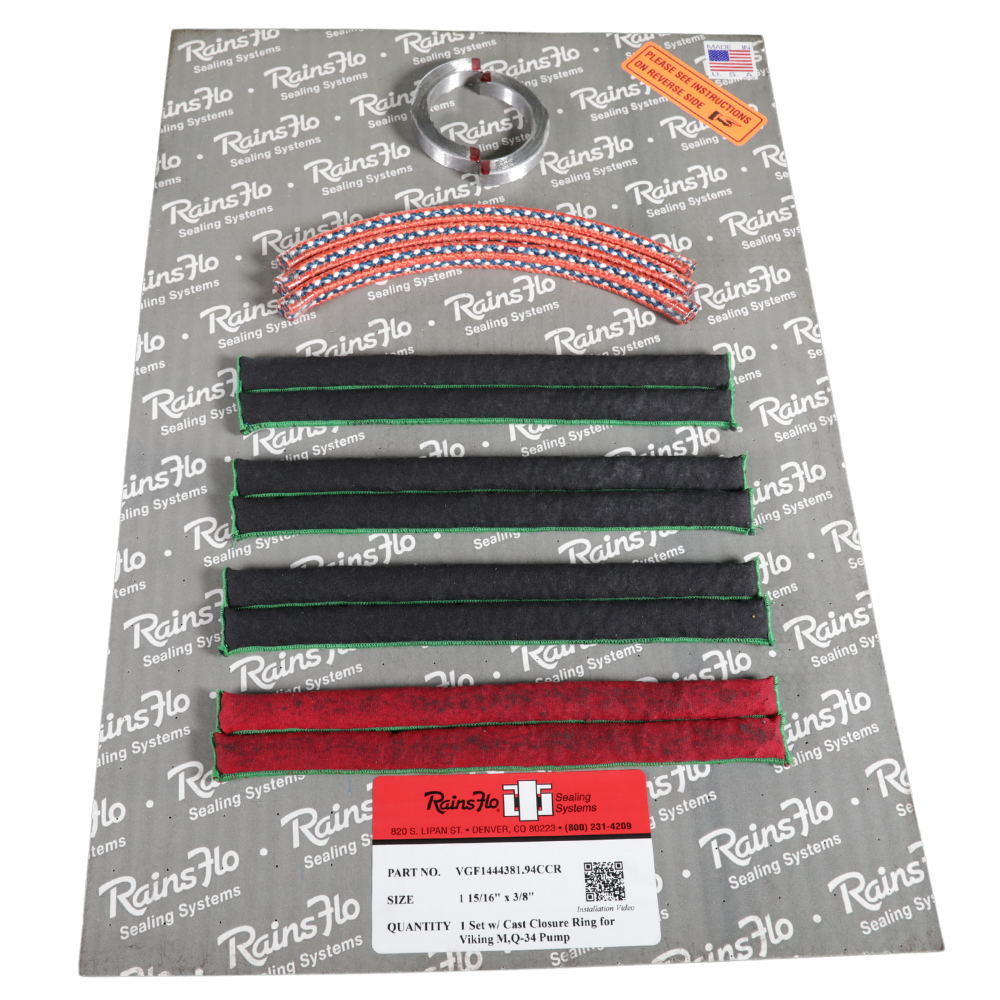 against the shaft. This adaptability reduces friction, wear, and leakage in environments where shaft motion isn’t perfectly concentric — a frequent reality in agitators and pulpers.
Abrasion Resistance and Thermal Stability
GFM® materials are selected for their ability to resist abrasive media and temperature fluctuations common in aggressive mixing environments. This reduces the rate of degradation and extends the time between maintenance intervals — saving both material costs and labor hours.
Maintenance‑Friendly Features
RainsFlo sealing systems are designed for easier servicing. Tools like Packing Hooks assist technicians in removing and installing packing sets without damaging adjacent components. This is especially valuable in cramped or hard‑to‑reach seal chambers typical of large mixers and agitators.
Best Practices for Seal Performance
To get the most from any sealing system in agitation and mixing applications, follow a few straightforward practices:
- Inspect regularly during scheduled downtime to catch early signs of wear.
- Match seal material to your media and operating temperatures — abrasive slurries require more robust components.
- Ensure correct gland compression — too loose and leaks occur; too tight and you accelerate wear.
- Document performance cycles to anticipate replacement needs before failure occurs.
These habits, combined with a quality sealing solution like RainsFlo’s, reduce the surprise of unplanned shutdowns and keep mixing processes running reliably.
Optimizing Sealing for Long‑Term Mixing Performance
Sealing solutions for agitation and mixing aren’t just a maintenance detail — they’re a performance factor that influences equipment life, product quality, and operational costs. By choosing materials and systems designed for the realities of vibration, abrasive media, and irregular shaft motion, facilities can gain measurable improvements in uptime and reduced labor costs.
If reliability matters in your mixing operations, understanding how to match sealing technologies to real‑world conditions — and why RainsFlo’s solutions work where others fail — can make all the difference.