 RainsFlo
 Pump packing material plays an important role in helping industrial pumps control leakage while protecting shafts and sleeves from unnecessary wear. Although some heat is expected as the shaft rotates against the packing, excessive temperatures are not. When it overheats, it can wear out prematurely, increase maintenance costs, and even contribute to equipment damage. Understanding what causes overheating is the first step toward improving pump reliability and extending packing life.
What Is It?
Pump packing material is installed inside a pump’s stuffing box to create a controlled seal around the rotating shaft. Rather than completely eliminating leakage, properly installed packing allows the right amount of lubrication and cooling while reducing product loss.
Different types are designed to perform under specific operating conditions. Factors such as pressure, temperature, shaft speed, fluid chemistry, and abrasive solids all influence which material is best suited for an application.
Overtightening Creates Excessive Friction
One of the most common reasons pump packing material overheats is overtightening the gland. Applying too much compression increases friction between the packing and the rotating shaft or sleeve. As friction increases, so does heat.
Excessive gland pressure can lead to accelerated wear, shaft scoring, higher power consumption, and more frequent maintenance. Instead of immediately tightening the gland to stop every leak, adjustments should be made gradually while monitoring the pump’s performance.
Insufficient Lubrication
Lubrication helps reduce friction and carry heat away from the packing. When pump packing material becomes dry, friction increases quickly, causing temperatures to rise.
Conventional braided packing contains a limited amount of lubricant that can eventually wear away during operation. At Rainsflo, our Sealing Systems use a Granulated Flowable Material (GFM) that continually releases stored lubricant throughout its service life. This self-lubricating design helps reduce friction while promoting better heat transfer compared to traditional braided packing alone.
Choosing the Wrong Pump Packing Material
Not every material is suitable for every application. Selecting without considering operating conditions can lead to overheating and shortened service life.
When choosing, operators should evaluate:
- Operating temperature
- Pump pressure
- Shaft speed
- Fluid chemistry
- Abrasive solids
- Equipment design
- Shaft or sleeve condition
Selecting the right packing for the specific application helps reduce friction while improving sealing performance.
Equipment Problems Can Increase Heat
Sometimes overheating is not caused by the packing itself. Mechanical issues within the pump can place additional stress on pump packing material.
Common contributors include:
- Shaft misalignment
- Worn bearings
- Excessive shaft runout
- Damaged sleeves
- Blocked flush lines
- Improper lantern ring placement
These conditions create uneven pressure against the packing, allowing localized hot spots to develop. Addressing the underlying equipment issue is just as important as replacing.
Installation Makes a Difference
Even the highest-quality pump packing material can perform poorly if it is installed incorrectly.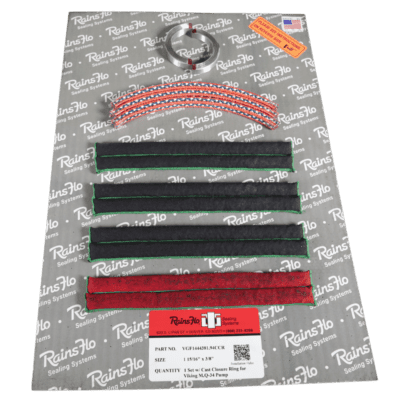
Before installing new packing, the stuffing box should be thoroughly cleaned and inspected. Packing rings should be installed in the proper sequence with joints staggered according to manufacturer recommendations. Gland adjustments should be made gradually during startup rather than tightening everything at once.
Rains-Flo provides pre-cut sets with color-coded installation diagrams to help simplify proper installation and improve long-term sealing performance.
How Rains-Flo’s GFM Material Helps Manage Heat
One feature that sets us apart is our Granulated Flowable Material technology. Unlike conventional braided packing that can act as a heat insulator over time, GFM is designed to conduct heat while continuously releasing lubricant throughout operation.
Because the material flows and adapts within the stuffing box, it can distribute gland pressure more evenly across the sealing area. This helps reduce localized hot spots while conforming to worn or irregular shaft and stuffing box surfaces. The result is improved sealing performance with less shaft and sleeve wear.
Protecting Your Equipment Starts With the Right Pump Packing Material
Overheating is rarely caused by a single issue. More often, it results from a combination of improper adjustment, inadequate lubrication, mechanical problems, installation errors, or selecting the wrong material for the application.
By choosing the appropriate packing, installing it correctly, and maintaining the pump regularly, facilities can improve reliability, reduce downtime, and extend equipment life. For demanding industrial applications, Rains-Flo’s self-lubricating, heat-conductive sealing technology offers an innovative approach to helping manage heat while delivering dependable sealing performance.